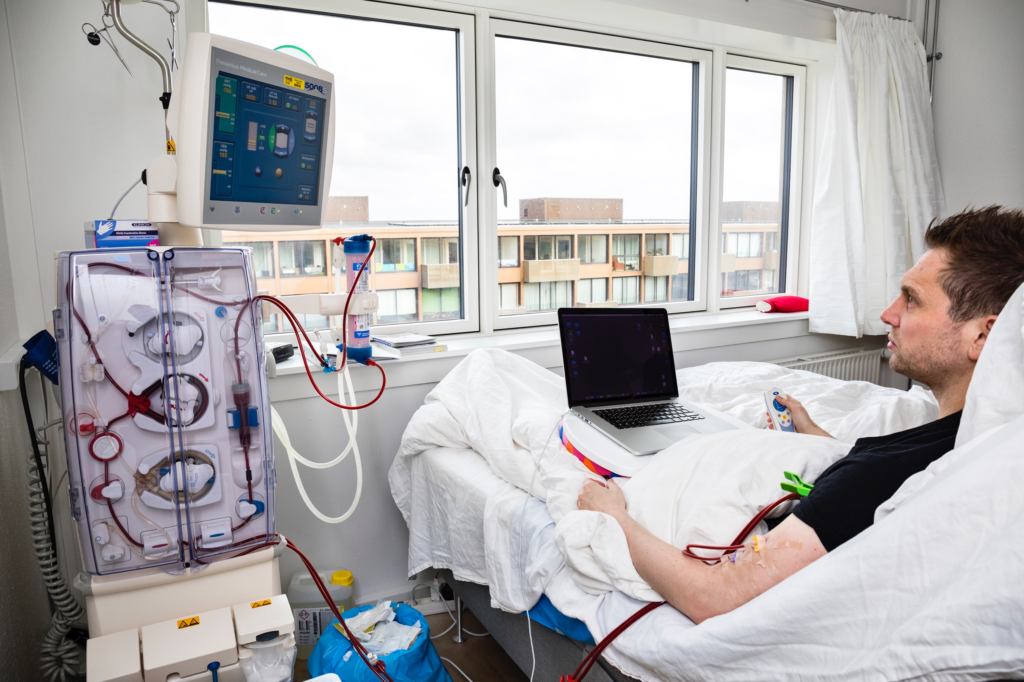
In haemodialysis, you blood is cleansed through a filter on a dialysis machine. The blood is led through a needle from your body to the filter on the dialysis machine and back into your body through another needle.
Most often a fistula is made in your arm where the two blood vessels, a vein and an artery, are sewn together. The needles used for dialysis leading the blood to the machine are placed in the arm with the fistula. If it is not possible to make a fistula, a haemodialysis catheter will be used, which is a plastic tube inserted into one of the large blood vessels in the chest through the skin.
In collaboration with the healthcare professionals, you plan when, how long and how often you will go through dialysis. We recommend that you have no less than 15 hours of dialysis each week divided into 4-6 dialysis sessions. The more dialysis you undergo, the more likely it is that you will experience fewer symptoms of kidney failure. Dialysis can take place both at daytime and during the night.
Usually, it takes three months (three to five days a week for four to six hours) to be trained for home haemodialysis. Specially trained nurses will teach you and the training takes place while you undergo dialysis.
Equipment for the treatment will be delivered to your home. You must store equipment for 14 days of treatment at a time, which corresponds to the size of a two wing wardrobe. In addition, you must store the dialysis machine and a water system (the size of a kitchen cabinet).
Every second or third month, you will meet for a follow-up at the hospital. It is possible to contact the hospital around the clock if problems arise related to your treatment.
The most frequent complications of home haemodialysis are:
- Difficulty placing the needles in the fistula
- Fistula or catheter infection. Infections are treated with antibiotics.